This is an original planning method. The actual prompt and visible timer take priority; there is no claimed complete theme list, fixed phase schedule, or guaranteed voting result.
Translate the prompt into something visible
Write a short mental description of the mood: restrained, playful, dark, soft, or sea-inspired, for example. Then choose one visible feature that could express it, such as a quiet neutral eye, a lifted outline, or a cool main color.
A mood is a design interpretation, not proof of the developer’s intended judging rubric. If the round gives more specific instructions, use them rather than substituting one of this site’s editorial theme names.
Make a complete basic version before fine detail
Choose the focal shape and a main color you can apply with your actual tools. Add enough definition that the idea reads at the size where you review the character. Only then decide whether a small accent improves it.
The goal is a complete interpretation you can still simplify. A complex plan that depends on an unfamiliar tool can leave you with several unfinished details when the visible time runs out.
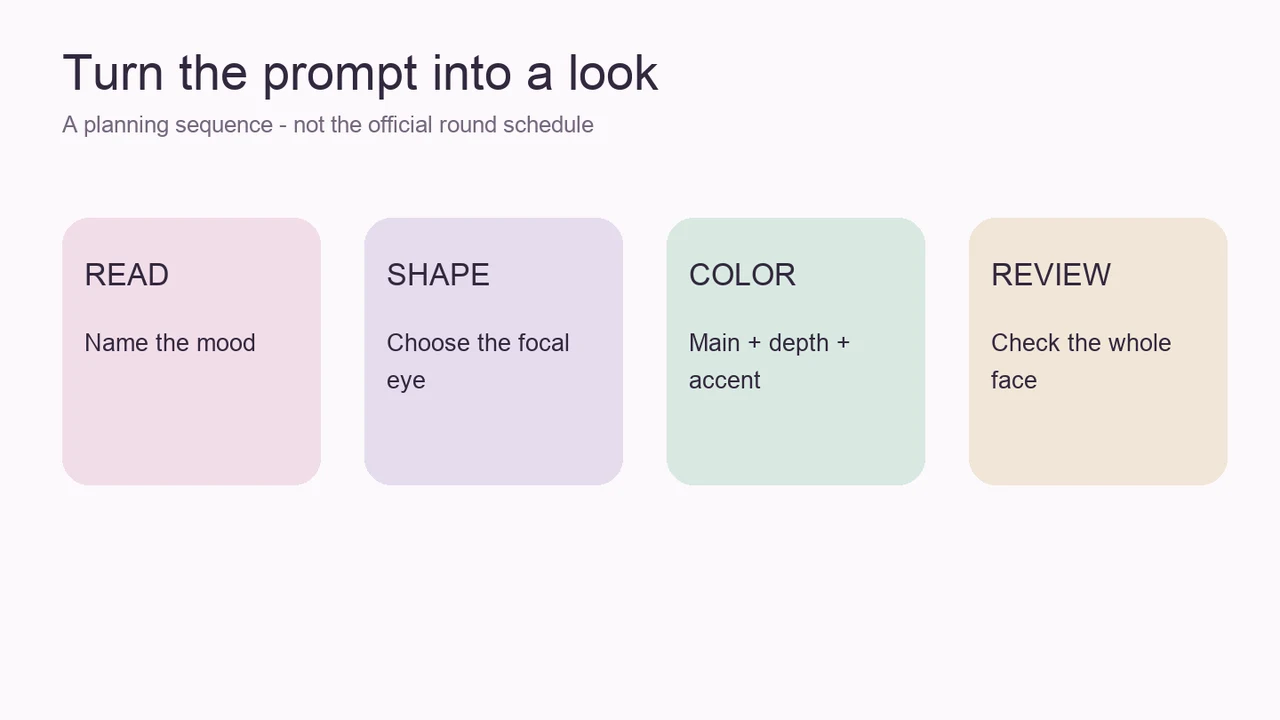
- Read the actual prompt and any displayed instructions.
- Choose one focal eye or another visible feature.
- Assign a main color, depth shade, and limited accent.
- Check the whole character before adding more decoration.
What if the visible timer is nearly finished?
Work on the most noticeable imbalance rather than starting a second concept. If hair hides the focal eye, simplify that obstruction. If a bright accent dominates the whole face, reduce it where the current interface permits.
This guide does not assign minutes to makeup, hair, or voting. The exact round duration is not verified by the sources reviewed, and joining late can change how much time you personally have.
Borrow a palette without assuming the theme is official
Our theme pages are worked styling examples. Use the color relationship that suits your actual prompt, and change the decorative idea when it does not. Coquette supplies a restrained rose direction; Mermaid uses seafoam and a lilac accent.
Neither title is presented as a verified entry in the game’s current theme rotation. Matching an editorial theme name does not establish that you followed the live prompt.
Review a result without inventing a winning formula
After a round, name one visual issue you can actually see. Change that element in your next plan while keeping the rest stable. This helps you compare your own designs without guessing why every player voted.
One vote result does not establish cause and effect. A readable interpretation is a styling goal; there is no verified formula that makes a color, pose, pass, or exact number of details guarantee a win.